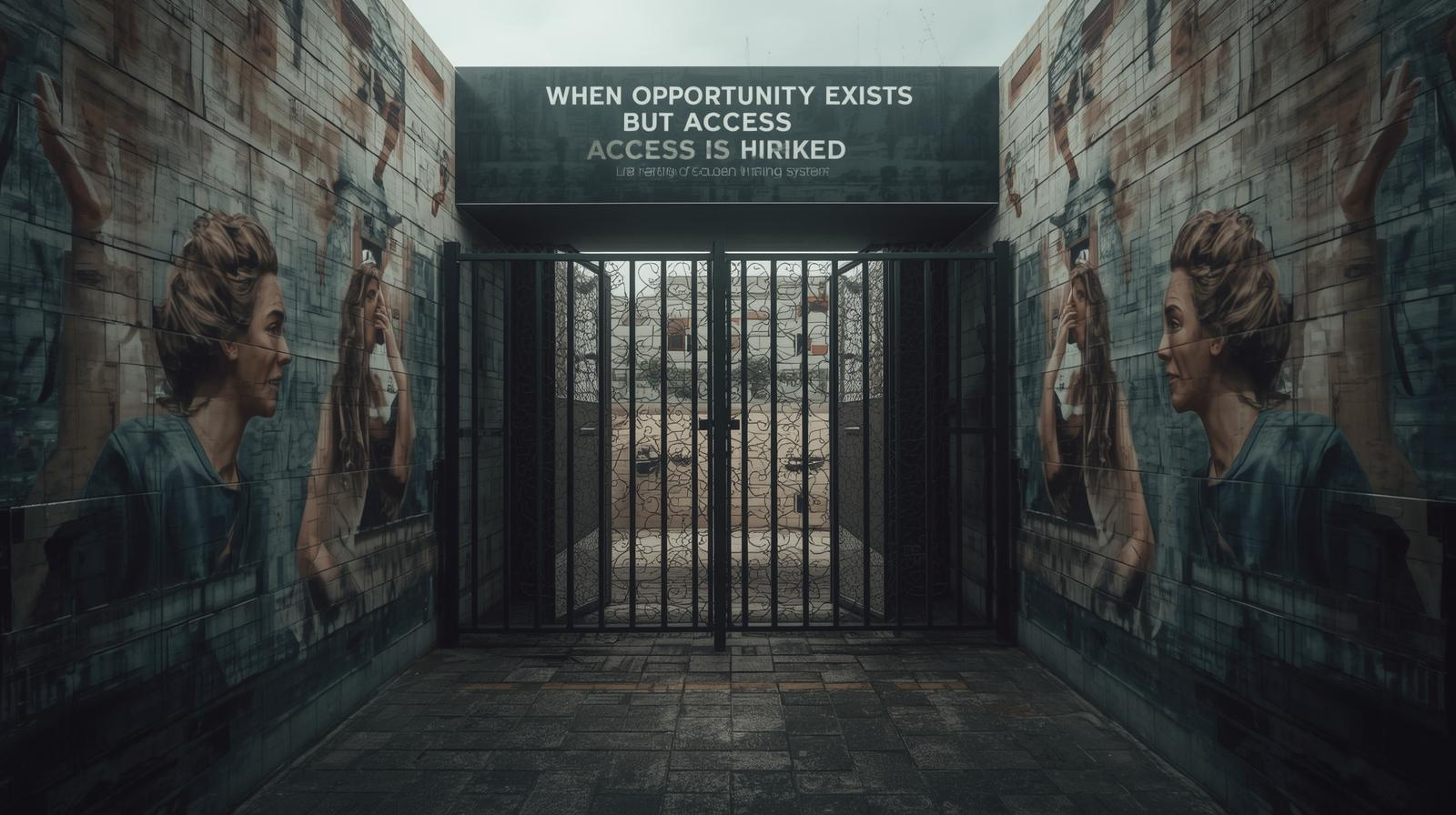
The Reality of Closed Hiring Systems
Across many parts of the world, especially in developing economies, job opportunities often exist but are never truly open. Before a role is publicly advertised, it may already be reserved for a family member, promised to a close friend, sold to an insider, or allocated within an inner circle. This practice silently excludes qualified candidates, not because they lack skill or experience, but because access is controlled by relationships rather than merit.
A Common Scenario in Nigeria: Opportunity Without Access
In Nigeria, this issue is widely recognized, even if rarely documented.
Example 1: The “Already Filled” Vacancy
A company posts a job opening online. Hundreds apply. Interviews are conducted and hope rises. Yet the role had already been assigned internally before the listing went live, often to a relative of a manager, a political connection, or someone who paid for access. The public recruitment process exists only as a formality.
Example 2: Government and Institutional Roles
In some public institutions, job slots are shared among families or networks. Candidates without connections are told to “come back later” or are required to pay unofficial fees. Many qualified graduates never get the chance to build experience because entry points are blocked.
Example 3: The Experience Trap Created by Nepotism
A common statement heard by young professionals is, “You don’t have experience.” Yet the same system gives roles to unqualified family members, denies capable outsiders access to internships, and recycles opportunity within the same circles. This creates a loop where experience is hoarded, not earned.
The Cost of Closed Opportunities
When jobs are reserved or sold internally, talent is wasted, innovation slows, trust in institutions collapses, and youth frustration grows. Many Nigerians are not unemployed due to lack of ability, but due to lack of fair access.
Why This Is Exactly What Web3 Seeks to Fix
This is where decentralized career platforms and on-chain hiring systems become powerful. Platforms like Bondex aim to make opportunities verifiable and transparent, reduce behind-the-scenes manipulation, and allow skills, reputation, and contribution to speak louder than connections. In a decentralized system, roles are publicly visible, hiring trails are auditable, identity and contribution are portable, and favoritism becomes harder to hide.
From Inner Circles to Open Networks
The Web3 Career World inside Decentraland represents more than innovation, it represents fair access. Instead of asking, “Who do you know?”, “Who sent you?”, or “Who reserved the slot?”, the future asks, “What can you build?”, “What have you contributed?”, and “What value do you bring?”
Why This Matters for Emerging Economies
In countries like Nigeria, Kenya, Ghana, and others, millions are skilled, millions are connected, and millions are ready. What is missing is open access. Decentralized career ecosystems can unlock global opportunities without local gatekeepers, enable skill-based hiring instead of favoritism, and create transparent systems that reward contribution.
Final Reflection
Opportunity should not be inherited. It should not be sold. It should not be hidden. The future of work must be open, transparent, and merit-based. This is why platforms building decentralized career infrastructure matter, not just for Web3, but for global fairness.
Recent Comments